Guides · Altamonte Springs, Florida
Altamonte Springs History: From 1882 Resort to Modern Suburb
**Altamonte Springs was built as a product before it was a place—a resort pitched to Northern money, and the town has been figuring out what to do with that inheritance ever since.**
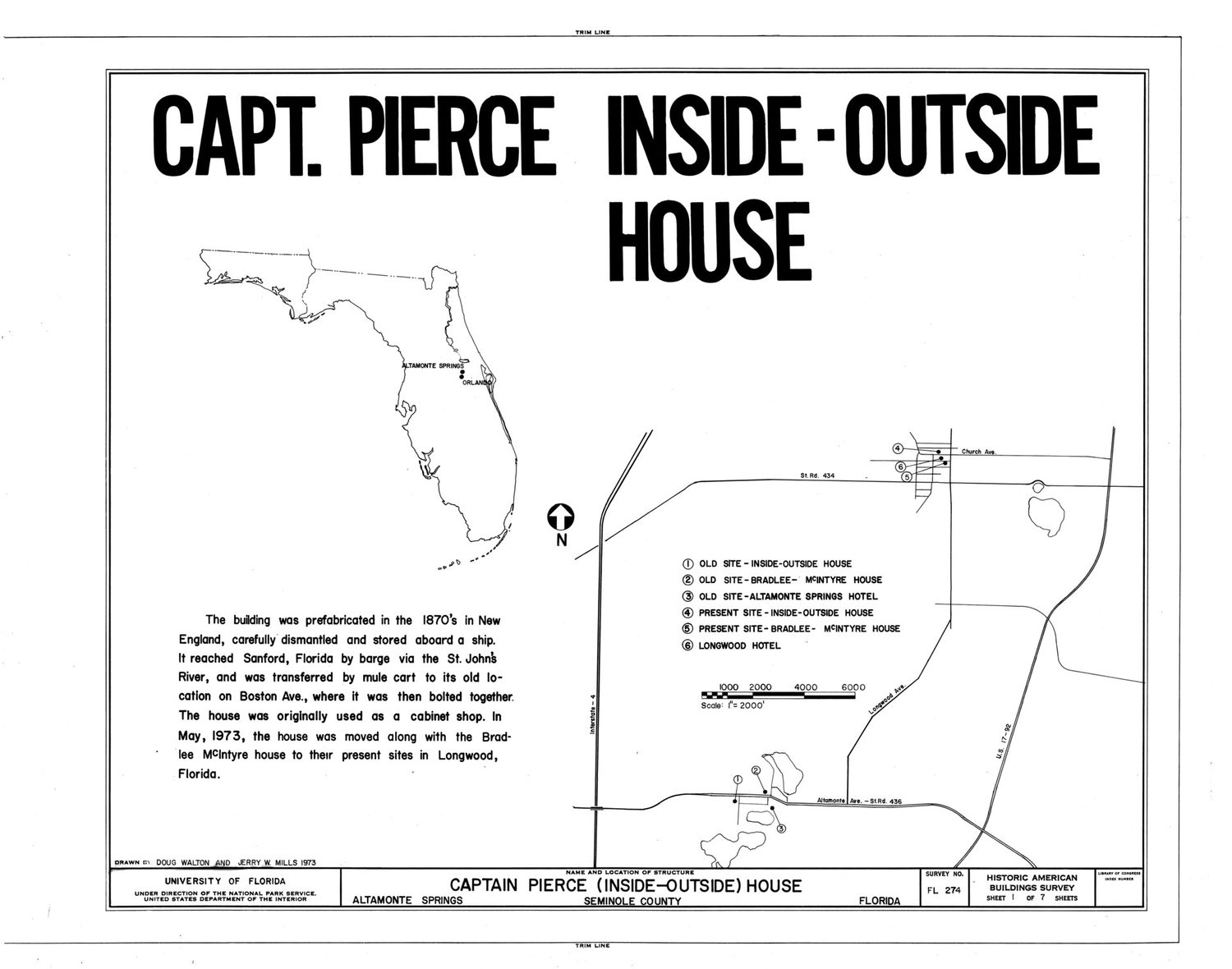
How Altamonte Springs Started as a 1882 Resort Town
The original industry of Altamonte Springs was not citrus, not lumber, not rail. It was the town itself. In 1882, Thomas C. Simpson and a group of Massachusetts businessmen formed the Altamonte Land, Hotel and Navigation Company, and they sold a destination. The resort trade followed, and the pattern was set: this was a place to be visited, not just inhabited. The company's pitch depended on a lake and a railway, and the town's early character was shaped by that commercial calculation. Dr. Washington Kilmer, who settled the area around 1870 and gave it the name Altamonte, had planted a settlement. The Massachusetts group turned it into inventory.
Altamonte Chapel: A Boston Architect's Legacy in Florida
The most tangible relic of that original pitch is a wooden chapel that refuses to stay put. Designed by a Boston architect and built in 1885 on Lake Brantley, four and a half miles from where it stands now, the Altamonte Chapel was part of the resort's charm—a bit of New England礼仪 in the Florida woods. Then the economics shifted. In 1897, the chapel was conveyed to Rollins College as payment for tuition, a transaction that says more about the value of a vacation chapel in a struggling resort town than any sermon could. It was dismantled and moved by wagon in the early 1900s, then moved again in 1969 to make room for a larger sanctuary. A building designed by a Boston architect for wealthy visitors ended up as a working church, relocated twice, outlasting the company that paid for it.
Altamonte Springs Incorporation: The 1920 Vote That Made It a Town
The shift from company project to community took decades. On 11 November 1920, residents voted 38 to 7 to incorporate the Town of Altamonte Springs. That vote is the hinge: before it, the place was an enterprise; after it, a polity. Thirty-eight people decided to stop being a product and start being a town. The margin—38 to 7—suggests a consensus, but not unanimity. Some presumably liked things as they were. But the incorporation marked the moment when the resort outpost became a self-governing entity, and the town began the long work of deciding what it wanted to be on its own terms.
Cranes Roost Park: Altamonte Springs' Modern Town Square
If the chapel is the town's memory, Cranes Roost Park is its present tense. The 45-acre park, built around a dredged lake, offers a mile of continuous walkway, a 62-foot tower, a European-style plaza with a choreographed fountain, and the Eddie Rose Amphitheater with a floating stage. It was renovated in 2016, a refresh that acknowledged the park's role as the town's center of gravity. The layout—water, walkway, performance space, fountain—recapitulates the original resort formula: a place designed to hold visitors, to give them something to look at and a reason to linger. The difference is that now the visitors are mostly residents.
Altamonte Springs Demographics: A Resort Town Turned Suburb
The numbers tell the story of a place that made its peace with permanence. Altamonte Springs has a population of 45,657, with a median age of 36.8 years. The median home value is $263,600; the median gross rent is $1,624. Median household income sits at $64,106, with an unemployment rate of 5 percent. Some 38.9 percent of residents hold a bachelor's degree or higher. Of 22,759 housing units, only 302 are held for seasonal or recreational use—about 1.3 percent. There are 2,080 vacant units. The seasonal footprint is a vestige, not a business model. This is a working, permanent community now, educated and employed, living in a suburb that happens to have a lake and a history.
Red Hot & Boom and Other Events That Still Draw Visitors
And yet the town's biggest annual event still trades on the original appeal. Red Hot & Boom, billed as Central Florida's biggest Independence Day celebration, is held on 3 July at Cranes Roost Park—not the 4th—with free admission, live music, and fireworks over the lake. The 2026 edition was the 29th. The event is a direct descendant of the resort trade: draw a crowd, give them a show over the water, send them home happy. The same pattern holds regionally. Sanford, 12 miles away, has Porchfest. Oviedo, 14 miles, hosts Great Day in the Country. Mount Dora, 20 miles, runs an arts festival and a craft fair. Clermont's Pig on the Pond is 25 miles off; Dade City's Kumquat Festival is 59. Every town in the region is in the business of attracting visitors for a day. Altamonte Springs just started earlier.
| Measure | Value |
|---|---|
| Population | 45,657 |
| Median age | 36.8 years |
| Median household income | $64,106 |
| Unemployment rate | 5 percent |
| Bachelor's degree or higher | 38.9 percent |
| Median home value | $263,600 |
| Median gross rent | $1,624 |
| Total housing units | 22,759 |
| Seasonal/recreational units | 302 |
| Vacant housing units | 2,080 |
The town's identity beyond being an Orlando suburb is that it was never meant to be a suburb at all. It was a destination, then a town, then a suburb, and now something of all three. The chapel moved twice because the community outgrew its original resort ambitions. Cranes Roost draws crowds because people still come to see the water and the show. The seasonal units are few, but the calendar still runs on visitors. Altamonte Springs was built as a product, and it still knows how to package a day by the lake. It just lives here now.
Common questions
- What is the Altamonte Chapel and why did it move?
- The Altamonte Chapel is a wooden building designed by a Boston architect and built in 1885 on Lake Brantley. It was conveyed to Rollins College in 1897 as tuition payment, dismantled and moved by wagon in the early 1900s, then moved again in 1969 to make room for a larger sanctuary.
- Who founded Altamonte Springs?
- Dr. Washington Kilmer settled the area around 1870 and named it Altamonte. Residents voted 38 to 7 to incorporate on 11 November 1920. The resort town was later built by the Altamonte Land, Hotel and Navigation Company, formed in 1882 by Thomas C. Simpson and Massachusetts businessmen.
- What is there to do at Cranes Roost Park?
- Cranes Roost Park is 45 acres around a dredged lake with a mile of continuous walkway, a 62-foot tower, and the Eddie Rose Amphitheater with a floating stage. It has a European-style plaza with a choreographed fountain, renovated in 2016. It's the town's centre of gravity.
- When is Red Hot & Boom and what is it?
- Red Hot & Boom is Central Florida's biggest Independence Day celebration, held on 3 July at Cranes Roost Park, not the 4th. It offers free admission, live music, and a fireworks show over the lake. The 2026 edition was the 29th.
- What is the median home value and rent in Altamonte Springs?
- The median home value is $263,600 and median gross rent is $1,624. Median household income is $64,106. The population is 45,657 with a median age of 36.8 years. About 38.9% of residents hold a bachelor's degree or higher.
- Is Altamonte Springs a good place for day trips to nearby towns?
- Yes. Sanford is 12 miles away with Sanford Porchfest, Oviedo is 14 miles with Great Day in the Country, and Mount Dora is 20 miles with arts and craft fairs. Clermont is 25 miles with Pig on the Pond, and Dade City is 59 miles with the Kumquat Festival.
Every business named above is one we hold a listing for, and every date traces to a source on our sources page. We do not describe menus, interiors or service we have not verified. Details change — confirm before you travel.